A vision for a low carbon food future in Penarth
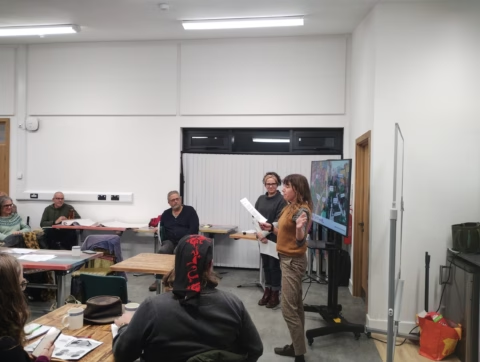
This November, Food Vale attended the Gwyrddio Penarth Greening (GPG) Autumn ‘Zero Carbon Future’ event. GPG is a Penarth-based community group that seeks to raise awareness of climate issues and look at ways that we can all live a more sustainable life. Louise from Food Vale collaborated with Sally from Penarth Growing Community (one of GPG’s key initiatives) to write and deliver a vision for a low carbon food future in Penarth…“It is 2034 and I am on my way to meet Sally, a local community food activist in Penarth, to reflect on some of the recent wins for our local food system – as well as to make plans for what we need to do next. I hop on the train and as I look out the window at the scenery passing by, I can hardly believe how far we have come in the last ten years… Back then, in 2024, things were looking pretty bleak: we were all still reeling from the impacts of Brexit, the COVID pandemic, the cost-of-Living crisis, and the ever-growing threat of the Climate and Nature Emergency. Looking back now, it seems cruel that it had to get worse before it got better. The ensuing catastrophes that hit throughout the late 2020’s: the floods, the droughts, the losses in food production and wildlife, the empty supermarket shelves and the lines of people queuing up for food banks, all seemed to send the message loud and clear. Our food system was broken, and we needed to change our ways. The train pulls up at the next stop, Cogan, where – just over the tree line – I can see roof of the cob building at the St Cyres’ Market Garden. This is just one of several market gardens that have been set up across the Vale, and has already been producing fruit and veg for three years now. The garden started out small at first; growing carrots, cabbages, squashes and peas, but has recently started branching out into more unusual varieties such as okra and aubergine thanks to its new polytunnels. The market gardens are able to share learning and resources with our local heritage farmers, who – thanks to the renewed deep appreciation and value of our farmers at the local and government level, have been better resourced to engage in nature-friendly farming, diversify and steward their land. And what’s more – once we had made the necessary strategic changes to the way food is procured locally – the food grown in the Vale was able to end up on plates in local schools, hospitals and care homes. (2mins) It took a bit of work to be able to adapt the school menus to the new local availability of veg, but now every week pupils are able tuck into the high-quality, healthy meals using local veg, such as the delicious and iconic Welsh dish of cawl. The impacts of this have been boundless, with the new Welsh curriculum enabling pupils to learn core skills as well as about health, sustainability and ecology with and through food. As a result of all this, the Vale of Glamorgan is finally regaining its reputation as The Garden of Wales. Our flora and fauna have benefited too: with increases in numbers of the rare High Brown Fritillary butterflies, water voles at Cosmeston Lake, skylarks, yellowhammers, otters, and even beavers. What is really exciting too, is that we are just starting to see the impact that all this has had on the health and wellbeing of our local communities, leading to enormous savings for our NHS.” “It’s 2034, and I’m meeting Louise from the local food partnership. I’m 57, Arthur is 16, and we’re reflecting on the journey that began when we started the food forest project at Stanwell School. We planted the first trees when Arthur was 11, overcoming resistance from the school to create a space filled with fruit and nut trees, edible shrubs, and perennials. It took years of persistence, but a shift in Town Council policies—prompted by food shortages—finally made it possible to prioritise land for food production. Our first success was transforming the old tennis courts on Augusta Road into Meadow Lane Gardens, a small but highly productive community space. Then came the Heritage Garden Apothecary at Cosmeston, on the site of a medieval village. It was a tough battle, but worth it. The town is now unrecognisable. Last month, we held our annual Apple Day Fiesta, closing the High Street for a parade with music, street food bikes, and huge willow sculptures made by schoolchildren from willow we grow locally. These willow trees help manage water runoff on Cogan fields, and alongside the trees in rain gardens in the town centre, we’ve achieved nearly 40% tree cover—well above our original 20% target, and a third of the trees offering edibles too. Penarth was crowned Wales’ first Orchard Town in 2028, and today, our local food culture is thriving. Most people here are involved in food production, helped by the four-day working week, and many volunteer their time to tend gardens on Fridays. Our Remakery offers workshops on community food growing, helping everyone get involved. The town’s shift away from supermarkets to local enterprises—like the Sunday market run by Penarth Together, our local Transition group —has been key. The market, modelled on The Frome Independent, took years to establish, but it now showcases produce from local allotments and gardens, with surplus donated to those in need. A gift economy is taking shape, supported by young people in the local Democratic School Partnership, who manage crop collections on cargo bikes. We’re seeing the beginnings of a more sustainable, local food system. As I meet Louise at the café—run by a local cooperative—we sip Fairtrade coffee and reflect. The changes have been incredible, but we both acknowledge the losses that could have been prevented had we acted sooner. We didn’t meet our 2030 net-zero target, but the foundation is set for achieving it soon. The actions of the past decade have undoubtedly helped us mitigate some of the worst impacts of climate change.”